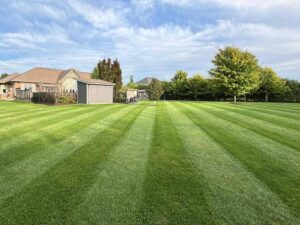
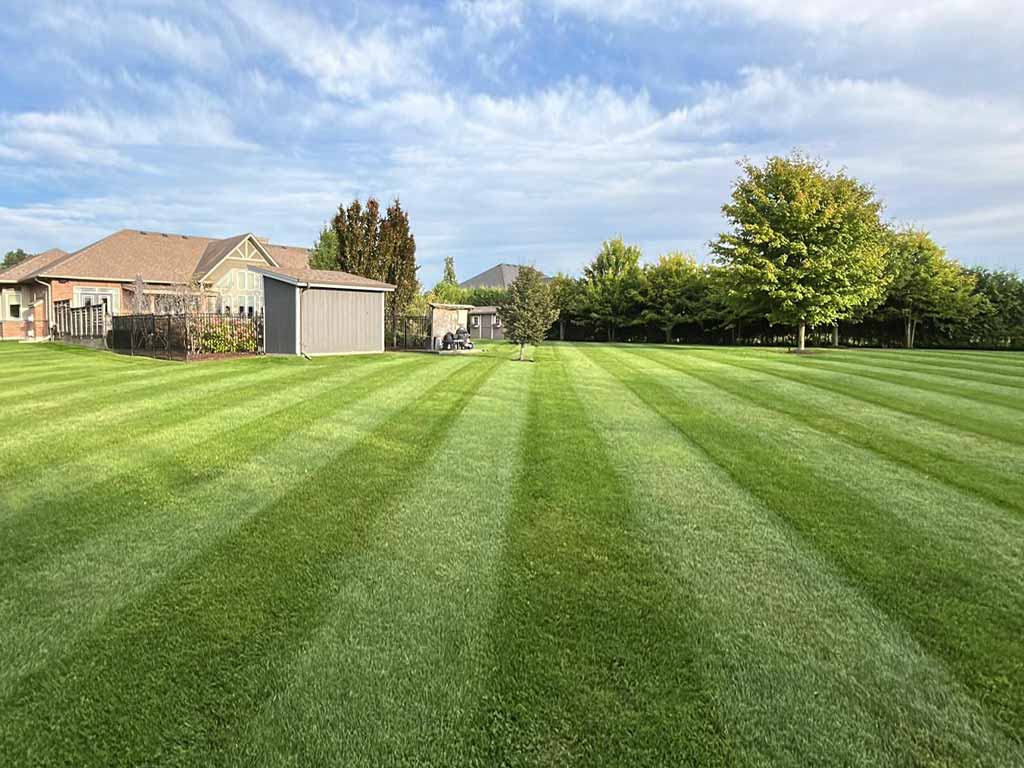
If you live in Lexington, Irmo, or Forest Acres, you know the pattern: your Bermuda looks incredible in May, then July hits, the clay soil locks up, and brown patches creep in. It’s not you — it’s our Piedmont clay and 100-degree heat index. For Midlands homeowners, the difference between a lawn that survives July and one that thrives comes down to three things: water timing, blade height, and dealing with our clay honestly.
Why Columbia Clay Is Different
Our red clay is ultisol — acidic, dense, and it compacts after every heavy rain. Water sheets off instead of soaking in. Roots stay in the top 2 inches, then cook when surface temps hit 115°F. Most irrigation systems in Elgin and Blythewood were installed without a clay-specific audit, so they run daily for 10 minutes and never push water deep enough.
- Core aerate every May — not March, not September. May gives Bermuda 120+ days to fill holes.
- Top-dress with 1/4″ compost after aeration — builds organic matter that clay lacks.
- Test pH yearly — Columbia clay often sits at 5.2-5.8. Bermuda wants 6.0-6.5.
✓
Pro Tip from the Field
If water puddles for more than 4 hours after irrigation, your infiltration rate is below 0.3″/hr. That’s a compaction issue, not a sprinkler issue. Aerate first, then adjust runtime.
The 1-Inch Rule (Done Right)
Bermuda needs about 1 to 1.25 inches per week in summer, delivered in two deep sessions — not daily sprinkles. Water between 4am-8am. We use catch cups on every irrigation audit to prove it. One tuna can = ~1 inch, but we measure with calibrated cups across all zones.
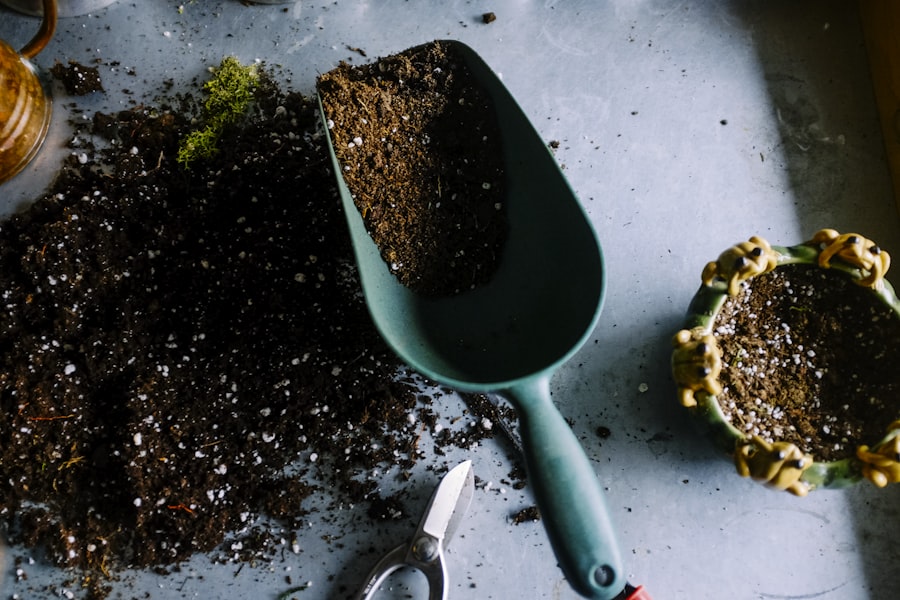
A properly audited rotor zone in Irmo — even coverage beats daily misting.
“We cut water bills by 22% last July just by switching two homes from 7-day to 2-day deep watering. Greener lawns, less fungus.”
— Field note, Forest Acres route, July 2025
Mowing Height Matters More Than Fertilizer
Scalp Bermuda to 1 – 1.5 inches in late May, then maintain at 1.5 – 2 inches through August. Taller than 2.5 inches traps humidity and invites Large Patch. Sharp blades every 10 days. Dull blades tear leaf tips and make the lawn look gray by noon.
Feeding & Top-Dressing Schedule for Columbia
Mid-May: 1lb N per 1k sq ft slow-release. Late June: iron + potassium to handle heat stress. Avoid high nitrogen after August 1 — it pushes tender growth that winter kills.
FAQ From Local Homes
Can I overseed Bermuda with rye for winter?
We don’t recommend it in the Midlands — rye competes in spring and thins Bermuda. Dormant brown is healthier than spring scalping stress.
How often should I water new sod in Columbia clay?
First 10 days: light 2x daily to keep seams moist. Days 11-21: once daily deep. After that: switch to 2x weekly deep to force roots down.